
World steel production, the future is but a question mark
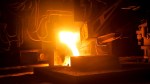
(PHOTO: ZEPHYLWER0 / PIXABAY.COM)
China and the emerging countries continue to improve their steel outputs, but other developed economies such as Japan, United States, Germany and Italy keep the pace and manage to stay among the first ten world’s leading steel producers keeping distance from Taiwan and Ukraine.
The latest release of global steel production statistics for 2017 broadcasted by the Wordsteel Association recently shows that in 2016 China reported a significant increase of 5.7% from 787 to 832 million tons equal to 49% of the entire world steel production, a considerable change from its recent trend of decelerating growth.
All the other top producing countries except Japan experienced a positive growth from the modicum 1.3% in Russia to the robust 13.1% reported by the Turkish producers.
The years of the crisis seem to be behind, and they will definitely be if 2017 keeps the same pace as 2016, as the behavior of the downstream consumer sectors seem to indicate.
Particularly worthy of attention is the recovery of Italy, whose domestic producers reached 24 million tons, about 600 thousand tons more than in 2016 (+ 2.9%), bringing the output to levels that were not seen since 2013. A significant result, especially considering that the market still lacks, in theory, some million tons of ILVA, a plant that today runs far below its potential, as it and its main subsidiaries have been led by a board of commissioners since January 2015 after being placed under extraordinary administration as provided for in the case of large companies of strategic interest to the nation.
This action taken at ILVA was necessary to protect industrial assets of significant national interest, ensure continuity of production within the imposed limits and perform the redevelopment works required by the Integrated Environmental Authorization plan (AIA) ahead of the process of disposing of the Group’s operating units.
The Italian mini-rebound goes parallel with the partial recovery of the European Union market which, also thanks to the customs barrier erected against imports from China and other countries accused of unfair commercial practices, closes the year with an increase of 4.1% at 169 million tons, with Poland and the Czech Republic poles apart at 14.8% and -14.2% respectively.
The global share of 28 EU member states, however, is worth only ten percent of world production, amounting to 1,691 million tons (+ 5.3%). The pace of the old continent continues to turn out, even in the last year, slower than that of emerging countries, and of China that alone produces half of the world steel today.
All this despite the Chinese program of business closures launched with the aim of reducing the enormous surplus of production capacity. Behind China there is Japan, an historic world power in steel that in 2017 was the only steel country not to grow, that is -0.1%, for an output of 105 million tons. India, which last year broke through the 100 million metric tons, with an increase of 6.2 percent, is also accelerating. In fourth place in the ranking there are the United States, with 82 million tons produced (+4%), followed by Russia in fifth place, which last year increased its output by 1.3% closing at 71 million tons, although the Commonwealth of Independent States is the only one that did not grow in 2017.
In sixth place is South Korea, at 71 million tons, 3.7 % more than the previous year, behind which Germany rests with its 44 million tons (3.5%), followed by Turkey, whose overtake seems only a matter of time, given the speed of growth of this nation, as last year its production was 38 million tons, 13. The last two positions in the ranking of the top ten world producers are occupied by Brazil, which in a year managed to increase its steel production by 9.9%, from 31.3 to 34.4 million tons, and as already noted said, from Italy.
Many questions on whether or not this strong growth is somewhat at odds with are still unanswered: what is happening? is it a reflection of a strong economy or of other realities? Will the steel industry benefit from the momentum that the International Monetary Fund predicts for the global economy in 2018 and 2019?
As Edwin Basson, the Director General of the Wordsteel Association, stated last January, it is improbable that a substantial rebound in the global steel industry happens if China’s steel production and demand do not recover remarkably.
Furthermore, as a long-term structural factor, the promotion of the circular economy principle and environmental challenges may lead to growing reuse of steel, a trend that is expected to be more prevalent in the future decades.
References: Worldsteel Association, 2018; The Guardian, 2018;
 Zhu+Rich Sagl